
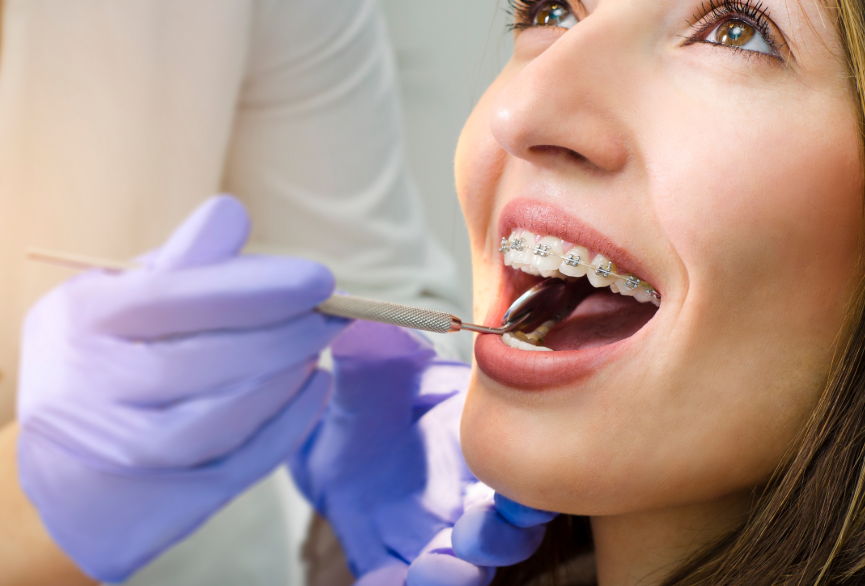
If you’re thinking about getting braces, you might wonder if you can simplify the process by treating only your top teeth or only your bottom teeth. On the surface, it sounds like a smart idea—it may feel more affordable, less noticeable, and easier to manage.
However, while single-arch braces (treating just one row of teeth) are sometimes used in very specific cases, they are not recommended for most patients. Orthodontic treatment is about more than straightening teeth—it’s about creating a healthy, functional bite.
Why Teeth Don’t Move in Isolation
Your upper and lower teeth work together as a system. Every time you chew, speak, or even rest your jaw, the alignment between both arches matters. If only one arch is moved, it can create imbalance in how the teeth fit together.
For example, straightening only the top teeth without adjusting the bottom teeth may result in a bite that no longer aligns properly. This can lead to issues like uneven wear, jaw discomfort, or difficulty chewing.
Orthodontists carefully plan treatment to ensure both arches work together harmoniously, not just look straight individually.
Cosmetic Improvement Doesn’t Always Mean Functional Improvement
One of the main reasons people consider braces on just one arch is cosmetic appeal. If only the top teeth are crowded or crooked, it may seem logical to treat just that area.
But orthodontic treatment is not only about appearance. Even if teeth look straighter on the outside, underlying bite issues can still exist—or even develop—if both arches are not properly aligned.
This is why most orthodontists recommend treating both upper and lower teeth together. It helps ensure that the final result is both attractive and functional.
When Single-Arch Braces Might Be Used
There are a few limited situations where braces on only the top or bottom teeth may be considered. These cases are usually very mild and carefully selected by an orthodontist.
For example, if a patient has previously had orthodontic treatment and only minor shifting has occurred in one arch, a short-term single-arch correction might be possible. However, this is the exception rather than the rule.
Even in these cases, orthodontists will evaluate the bite carefully before deciding whether this approach is appropriate.
Why Full Treatment Often Saves Time in the Long Run
While single-arch braces may seem like a shortcut, they can sometimes lead to longer or more complicated treatment later. If the bite becomes unbalanced, additional corrections may be needed to fix problems that develop over time.
Treating both arches together helps ensure that the teeth align properly from the start. This can reduce the risk of future adjustments and help achieve more stable, long-lasting results.
Orthodontic treatment is an investment, and planning it correctly from the beginning often leads to a smoother overall experience.
The Importance of a Personalized Orthodontic Plan
Every smile is different, which is why orthodontic treatment is never one-size-fits-all. An orthodontist will evaluate your teeth, bite, jaw alignment, and long-term goals before recommending a treatment plan.
In some cases, alternatives like clear aligners or limited treatment may be discussed, but only when they support a healthy bite outcome.
If you’re considering braces and wondering what’s best for your situation, a professional evaluation is the best place to start. Straight teeth are important—but a balanced bite is what keeps them healthy for life.
About the Practice
Timeless Smiles in Morgan Hill is led by Dr. Jenny Hong, a highly trained dentist who blends science, artistry, and advanced clinical skill to create healthy, lasting smiles. Dr. Hong has extensive education in molecular biology and dentistry, along with advanced training and continuing education in implant dentistry, digital techniques, and cosmetic care. She is known for her detail-oriented approach and commitment to using modern dental technology to improve both comfort and treatment outcomes. At the practice, patients receive comprehensive care ranging from preventive and restorative dentistry to cosmetic and orthodontic services, all delivered with a strong focus on personalized treatment and long-term oral health.
Call us at (408) 763-3008 or schedule your appointment online.