
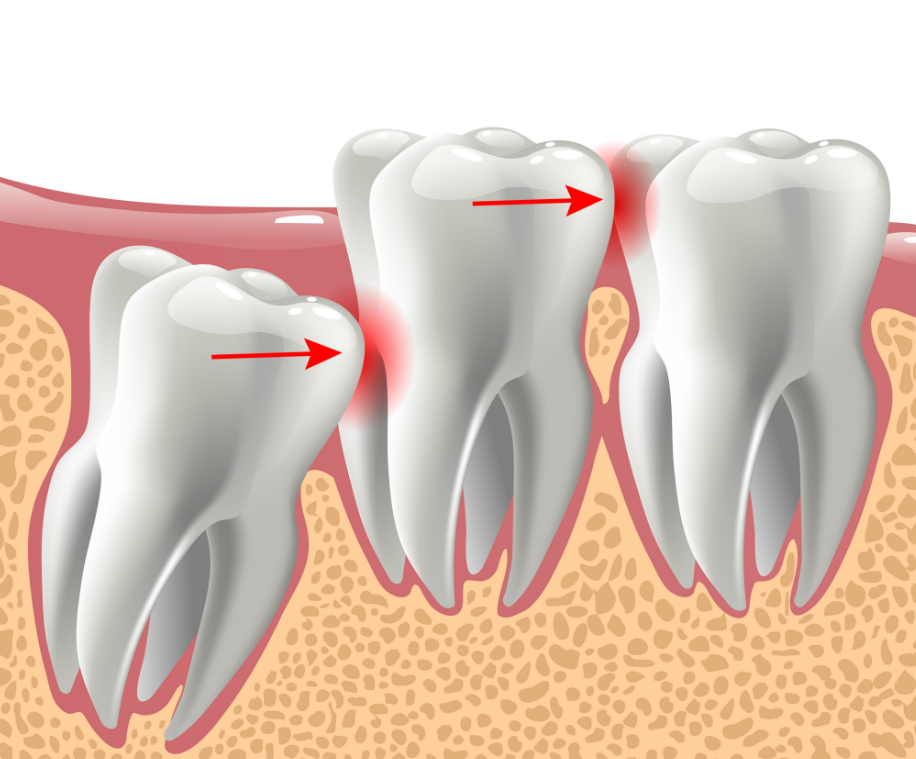
Wisdom teeth are the last set of molars to develop, usually appearing in the late teens or early twenties. For many people, these teeth don’t emerge the way they’re supposed to. Instead of growing straight up, wisdom teeth may remain trapped beneath the gums or grow sideways, leading to discomfort and potential oral health issues.
What Causes Wisdom Teeth to Grow Sideways?
The most common reason wisdom teeth grow sideways is a lack of space in the jaw. As human diets and jaw sizes have evolved over time, many mouths simply don’t have enough room to accommodate these extra molars. When space is limited, wisdom teeth may erupt at an angle or fail to break through the gums altogether.
Genetics can also play a role. If your jaw is smaller or your teeth are crowded, your wisdom teeth are more likely to become impacted.
Understanding Impacted Wisdom Teeth
When a wisdom tooth cannot fully emerge into the mouth, it’s considered impacted. Some impacted teeth remain completely below the gumline, while others partially break through. Teeth that grow sideways are often impacted against neighboring teeth, bone, or soft tissue.
Even if impacted wisdom teeth aren’t immediately painful, they can still cause problems beneath the surface.
Risks of Sideways Wisdom Teeth
Wisdom teeth that grow sideways can put pressure on nearby teeth, potentially causing crowding or shifting. This pressure may also lead to jaw pain or stiffness. Partially erupted wisdom teeth are especially prone to trapping food and bacteria, increasing the risk of decay and gum infections.
In some cases, impacted wisdom teeth can contribute to cysts or damage surrounding bone and tooth roots if left untreated.
Symptoms to Watch For
Not all impacted wisdom teeth cause noticeable symptoms right away. However, common warning signs include jaw pain, swelling, tenderness around the back of the mouth, difficulty opening the jaw, or persistent bad breath. Red or bleeding gums near the wisdom teeth can also signal infection.
Because symptoms may come and go, problems can progress quietly without obvious discomfort.
Why Removal Is Often Recommended
Dentists frequently recommend removing impacted or sideways wisdom teeth to prevent future complications. Early removal is often easier and associated with fewer risks, especially before roots are fully developed. Taking action before problems arise can help protect surrounding teeth and maintain overall oral health.
Regular dental exams allow wisdom teeth to be monitored and addressed before they cause serious issues.
Understanding why wisdom teeth grow sideways can help you make informed decisions about your oral health.
About the Practice
Dr. Jenny Hong of Timeless Smiles of Morgan Hill provides comprehensive dental care with a focus on patient comfort and long-term oral health. Dr. Hong is experienced in evaluating wisdom tooth development and recommending appropriate treatment when removal is necessary. Using modern diagnostic tools and a patient-centered approach, our team helps patients manage impacted wisdom teeth safely and confidently.
Call us at (408) 763-3008 or request an appointment online.